
Proton Therapy for Pancreatic Cancer
Fight Pancreatic & Bile Duct Cancer with Laser-like Precision
California Protons’ intensity-modulated pencil beam scanning technology is a highly precise and effective treatment for pancreatic and bile duct cancer that enables our doctors to selectively target pancreatic and bile duct tumors with high-dose radiation within this sensitive and challenging area.
Compared with older passive-scattering proton therapy treatment for pancreatic & bile duct cancer, our pencil beam scanning technology precisely delivers radiation treatment for pancreatic and bile duct cancer within 2 millimeters and with the utmost care. We can attack tumors layer by layer and minimize harmful exposure to surrounding healthy tissue and organs. This is important for pancreatic cancer patients because minimizing radiation to surrounding healthy tissue is crucial as your pancreas is located near several sensitive and critical tissues and organs. The reduction of radiation-related toxicity also increases the likelihood that patients can complete treatment with fewer interruptions or delays.
Pancreatic and bile duct cancers are among the most complex cancers to treat due to their deep location within the abdomen and their proximity to vital organs.
Traditional radiation therapy often exposes nearby healthy tissues to unnecessary radiation, which can cause severe side effects and limit treatment effectiveness. However, proton therapy provides a proven solution compared to traditional radiation, as it focuses on cancer treatment with incredible precision.
Why Choose California Protons Cancer Therapy Center?
California Protons Cancer Therapy Center is one of the most advanced proton therapy treatment facilities in the nation, featuring cutting-edge technology and a dedicated team of specialists experienced in treating gastrointestinal cancers. Our physicians have helped pioneer the use of pencil beam scanning in the United States, bringing world-class care to patients from across the globe.
We combine precision technology with compassionate care, ensuring every patient receives an individualized plan that maximizes effectiveness while preserving comfort and quality of life. From your first consultation through recovery, our goal is to guide and support you during every stage of your cancer journey.
Pancreatic & Bile Duct Cancer
Proton Therapy Treatment Details
What We Treat
- Pancreatic cancer
- Bile duct cancer (cholangiocarcinoma)
- Recurrent cancer
What We Do
- Target the tumor only
- Protect your liver, stomach, kidneys, small intestine and spinal cord
- Maintain your quality of life during pancreatic and bile duct cancer treatment
- Reduce side effects of treatment, including nausea, vomiting, heartburn, cramping, malabsorption (inability to absorb nutrients from food), diarrhea and dehydration
- Lower the risk of secondary cancer due to radiation
Compared to X-ray radiation, proton therapy for pancreatic cancer reduces radiation exposure to vital organs by:
Reduced radiation exposure to the spinal cord1
Reduced radiation exposure to the liver1
What Is Pancreatic Cancer?
Pancreatic cancer is a type of cancer that originates in the tissues of the pancreas, which is the organ responsible for producing digestive enzymes and hormones like insulin. This type of cancer is often diagnosed late, because early symptoms may be vague, such as fatigue, abdominal discomfort, weight loss or jaundice.
Once diagnosed, pancreatic cancer has a historically low five-year survival rate, which underscores the importance of precision treatment.
What is Bile Duct Cancer?
Bile duct cancer, also called cholangiocarcinoma, is a type of cancer that forms in the bile ducts. Bile duct cancer (cholangiocarcinoma) arises in the branching tubes that carry bile from the liver and gallbladder to the small intestine and is similarly challenging because of its anatomical environment. Tumors can be proximal (near the liver) or distal (near the pancreas) and often present at a stage when surgery alone is not sufficient.
Because the pancreas and bile ducts sit near sensitive organs like the liver, kidneys, stomach, and spinal cord, radiation treatment must be delivered with the utmost care. Fortunately, proton therapy’s precision in targeting the tumors helps overcome this challenge, enabling doctors to focus proton radiation only where it is needed most.
Benefits of Proton Therapy for Pancreatic Cancer
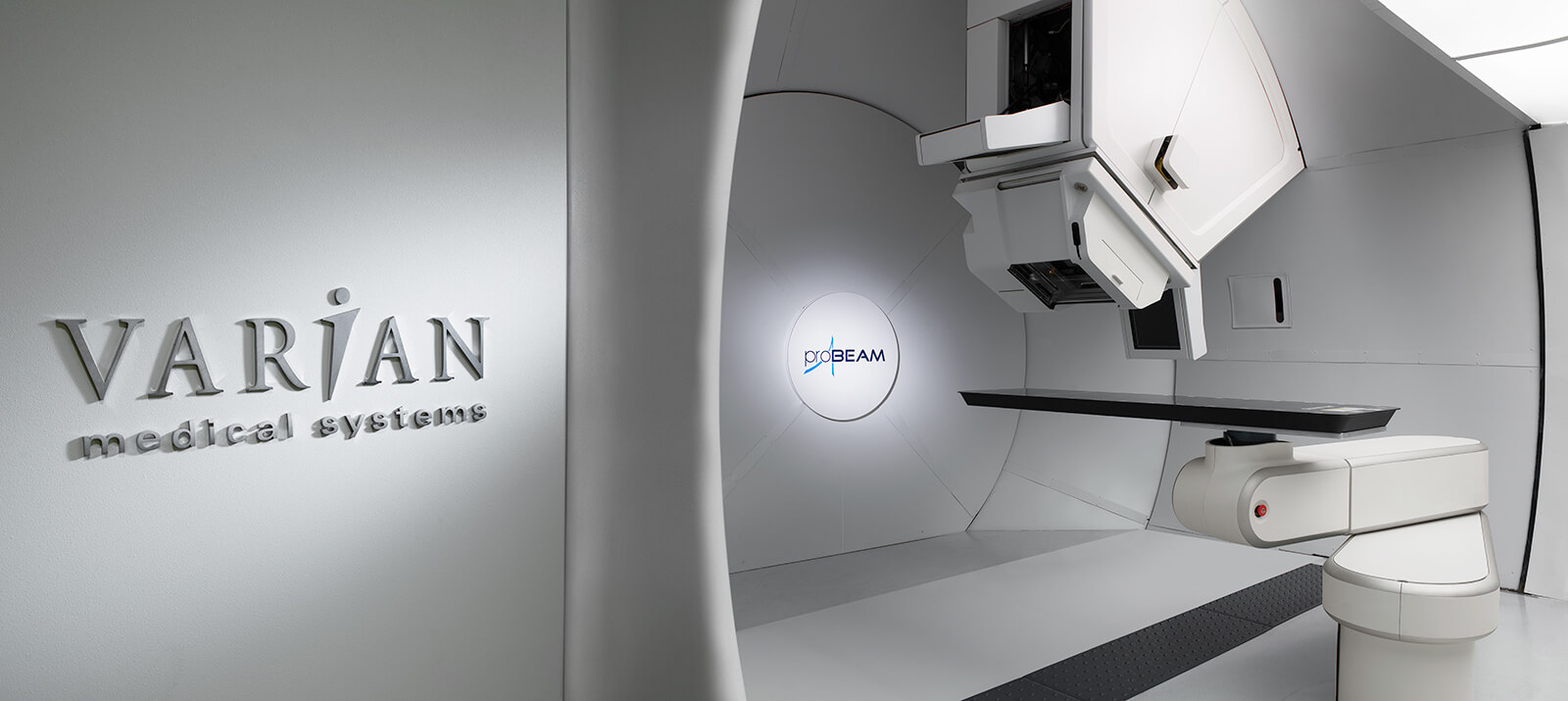
- Our pencil beam scanning technology precisely controls protons to place the Bragg peak—the point at which they deposit their maximum energy—directly in the tumor. This allows us to treat more complex tumor shapes and vary the dose within the tumor.
- Advanced proton therapy allows doctors to more selectively deliver high-dose radiation to cancerous pancreatic and bile duct tumors and tissues, and reduce the dose to surrounding healthy tissues and critical organs. This has been shown to deliver higher cure rates than X-ray radiation treatment even in some of the most challenging situations.
- Doctors can meticulously deliver high treatment doses of radiation to tumor cells, without overdosing surrounding critical organs and fragile tissues, such as your liver, stomach, kidneys, small intestine and spinal cord. Sparing these healthy tissues is extremely important as damage to these sensitive structures can result in ulceration, perforation, internal bleeding and failure.
- Specialized techniques can be used with proton therapy to target moving structures and organs with greater technical precision. This is important for the treatment of pancreatic cancer, when precision is key.
- Unlike with older technology, the treatment plan can be loaded into the computer and completed within a matter of minutes. Treatments are also non-invasive and convenient so patients can get back to their daily activities quicker.
In addition to physical precision, proton therapy allows for a personalized approach to cancer treatment. Every patient’s treatment plan is based on advanced imaging that maps the tumor’s exact location and movement.
Our treatment systems adjust in real time to account for your specific needs, ensuring every proton beam stays locked on the target.
Moreover, because proton therapy stops at the tumor rather than traveling through the body, there is no “exit dose.” This means surrounding organs receive almost no stray radiation, something that’s often impossible to achieve with traditional X-ray radiation.
Is
Proton Therapy Treatment for Pancreatic Cancer
Right for You?
While pancreatectomy surgery or the Whipple procedure is generally recommended for early-stage (resectable) pancreatic cancer that has not spread, radiation therapy may be recommended as well to ensure all of the cancer cells have been killed. Radiation and chemotherapy may also be used in patients who cannot undergo surgery. Treatment options are also affected by the type of pancreatic cancer, age, overall health and personal preferences.
At California Protons, our multidisciplinary team works together to create the most effective and personalized treatment plan for each & every patient. Whether your cancer is localized, advanced, or recurrent, our experts evaluate every option to help you achieve the best possible outcome.
At stage I pancreatic cancer is found in the pancreas only but its local growth affects more than a single layer of cells. While surgery to remove the tumor is the most common treatment, radiation therapy for stage I resectable pancreatic cancer is often recommended to ensure all of the cancer cells have been killed.
Pancreatic cancer at stage II has spread outside the pancreas or to lymph nodes. While surgery to remove the tumor is the most common treatment, radiation therapy for resectable stage II pancreatic cancer is often recommended to ensure all of the cancer cells have been killed and to reduce the risk of cancer spreading or returning.
Cancer has spread into major blood vessels or nerves but has not metastasized or affected other organs. While surgery to remove the tumor is the most common treatment, doctors likely are not able to remove all of it. At stage III, the pancreatic cancer is locally advanced and radiation may recommended in an attempt to shrink the tumor, limit additional tumor growth and reduce the risk of spread to other areas of the body.
At stage IV pancreatic cancer, cancer has spread from the pancreas to other organs. Drug therapy such as chemotherapy is the main treatment recommended for patients with metastatic pancreatic cancer. While surgery may be performed, these cancers cannot be completely removed. Proton radiation treatment may be used to shrink tumors or control pain.
Treatment for
Recurrent Pancreatic Cancer
Proton therapy is often the best way to treat recurrent tumors in areas that have previously been treated with radiation therapy.
Treating previously irradiated areas can be challenging. The healthy tissues around the recurrent tumor do not fully “forget” the previous radiation dose, and any added dose continues to increase the risk of normal tissue injury. Proton beam therapy may enable doctors to better concentrate the dose to the target and limit it elsewhere, allowing re-treatment with radiation in select patients.
Recent studies on re-irradiation using proton therapy for recurrent cholangiocarcinoma have shown promising results, with one-year local-control rates exceeding 80% and minimal severe toxicity. At California Protons, we leverage such evidence to guide our individualized re-treatment plans that prioritize safety and effectiveness.
Pancreatic & Bile Duct Proton Treatment Outcomes & Long-Term Effects
Proton therapy treatment for pancreatic cancer at California Protons Cancer Therapy Center in San Diego may offer similar outcomes to standard X-ray radiation, while reducing long-term and potentially life-threatening side effects such as ulceration, perforation, internal bleeding and organ failures due to radiation damage to the liver, kidneys and gastrointestinal organs. It may also lower chances for secondary cancers later in life due to the reduced radiation exposure to your surrounding healthy tissues and organs.
However, all cancer treatments have advantages and disadvantages. Be sure to discuss all of the potential risks, as well as treatment options, with your oncologist.
Contact California Protons Therapy Center Today
If you or a loved one is facing a diagnosis of pancreatic or bile duct cancer, we encourage you to speak with our team about whether proton therapy might be right for you. We believe that precision, care, and hope are meaningful allies in the fight against cancer.
FAQs About Proton Therapy For Pancreatic Cancer
What makes proton therapy for pancreatic cancer different from traditional radiation?
Proton therapy delivers radiation with incredible precision. Unlike traditional X-ray radiation that passes through the body and can damage healthy organs, proton therapy stops directly at the tumor. This is especially important for pancreatic cancer since the pancreas is surrounded by vital structures like the liver, kidneys, stomach, and intestines. By minimizing exposure to these organs, proton therapy can help reduce side effects while maintaining treatment strength.
Who is a good candidate for proton radiation therapy for pancreatic cancer?
Patients whose tumors are located near sensitive organs or blood vessels benefit the most from proton therapy. It is also an excellent option for individuals who cannot undergo surgery or who have already received radiation in the same area. Your oncologist will evaluate your overall health, tumor stage, and treatment goals to determine if proton therapy is right for you.
How long does each treatment take, and what should I expect during my visit?
Each session of proton therapy typically lasts between 20 and 30 minutes, though the actual treatment time is only a few minutes. You’ll lie comfortably on a treatment table while our technology delivers a highly focused proton beam to your tumor. The process is painless and noninvasive, and most patients can return to normal activities right after each session.
Will I experience side effects during proton therapy?
Your side effects vary depending on your specific treatment area and overall health. Because proton therapy limits radiation to healthy organs, most patients experience fewer and milder side effects, compared to traditional radiation. Some patients report mild fatigue, nausea, or digestive changes, which usually improve shortly after completing treatment. Your care team will provide personalized guidance to help manage any symptoms that arise.
How does proton therapy protect nearby organs like the liver and stomach?
The advantage of proton therapy lies in its ability to precisely control where radiation energy is released. By depositing the proton dose directly into the tumor, we significantly reduce exposure to surrounding organs such as the liver, stomach, and kidneys. This unparalleled precision helps prevent complications like ulcers, inflammation, or long-term organ damage.
Can proton therapy be used if my pancreatic cancer has come back after previous treatment?
Yes. Proton beam therapy for pancreatic cancer is often used to safely re-treat areas that have already received radiation. Because of its accuracy, our doctors can deliver an effective dose to the recurrent tumor while minimizing risk to previously treated tissues. This makes proton therapy one of the few viable options for managing recurrent or previously irradiated pancreatic tumors.
How does proton therapy fit into my overall cancer care plan?
Proton therapy is often used alongside other treatments such as surgery or chemotherapy. For example, it can help shrink tumors before surgery or eliminate remaining cancer cells afterward. Our multidisciplinary team collaborates with your other specialists to ensure that every aspect of your care works together for the best possible outcome.
Is proton therapy for pancreatic cancer covered by insurance?
Many insurance providers cover proton therapy for pancreatic cancer, particularly when the location of the tumor makes conventional radiation riskier. Our financial counselors will help verify your benefits, manage authorizations, and explain any costs before treatment begins.
What kind of results can I expect after proton therapy?
Outcomes depend on factors such as the tumor size, stage of cancer, and your overall health. However, many patients experience comparable or improved tumor control with fewer complications compared to traditional radiation. The goal of proton therapy is not only to effectively treat cancer but also to preserve your quality of life and long-term organ function.