

Proton Beam Therapy For Sarcoma
Fight Sarcoma with Laser-like Precision
California Protons’ intensity-modulated pencil beam scanning technology is a highly precise form of sarcoma radiation therapy that enables our doctors to selectively target sarcoma tumors that arise in your connective soft tissues or bones with high-dose radiation.
Compared with older passive-scattering proton therapy treatment, our pencil beam scanning technology precisely delivers radiation treatment for sarcoma within 2 millimeters and with the utmost care. We can attack tumors layer by layer and minimize harmful exposure to surrounding healthy tissue and organs. This is important for sarcomas located close to critical and sensitive organs in which unnecessary radiation could lead to increased side effects and risk of secondary cancer. The reduction of radiation-related toxicity also increases the likelihood that patients can complete treatment with fewer interruptions or delays.
What Is Proton Therapy For Sarcoma?
Proton therapy for sarcoma is an advanced form of radiation treatment that uses positively charged particles called protons instead of traditional X-rays, also known as photons. The key advantage of proton therapy is its ability to precisely control where radiation energy is released inside the body.
The Bragg Peak Advantage
Protons deposit most of their energy at a specific depth known as the Bragg peak. This allows radiation oncologists to place the highest dose directly inside the sarcoma tumor with little to no radiation beyond it. In contrast, conventional radiation passes through the body, delivering radiation both before and after reaching the tumor.
Because of this property, proton therapy may reduce radiation exposure to the spine, brain, heart, lungs, digestive organs, and reproductive structures, making it especially beneficial for complex or high-risk sarcoma cases.
Sarcoma Radiation
Treatment Details
What We Treat
- Bone sarcoma (osteosarcoma)
- Chondrosarcoma
- Chordoma
- Rhabdomyosarcoma
- Ewing sarcoma
- Other sarcomas found in your bones, muscles, tendons, cartilage, nerves, fat and blood vessels
What We Do
- Target the tumor only
- Protect your heart, lungs, spine, reproductive organs and digestive system
- Maintain your quality of life during treatment
- Reduce side effects of treatment, including nausea, vomiting and fatigue
- Lower the risk of secondary cancer due to radiation
Benefits of Proton Radiation Therapy for Sarcoma
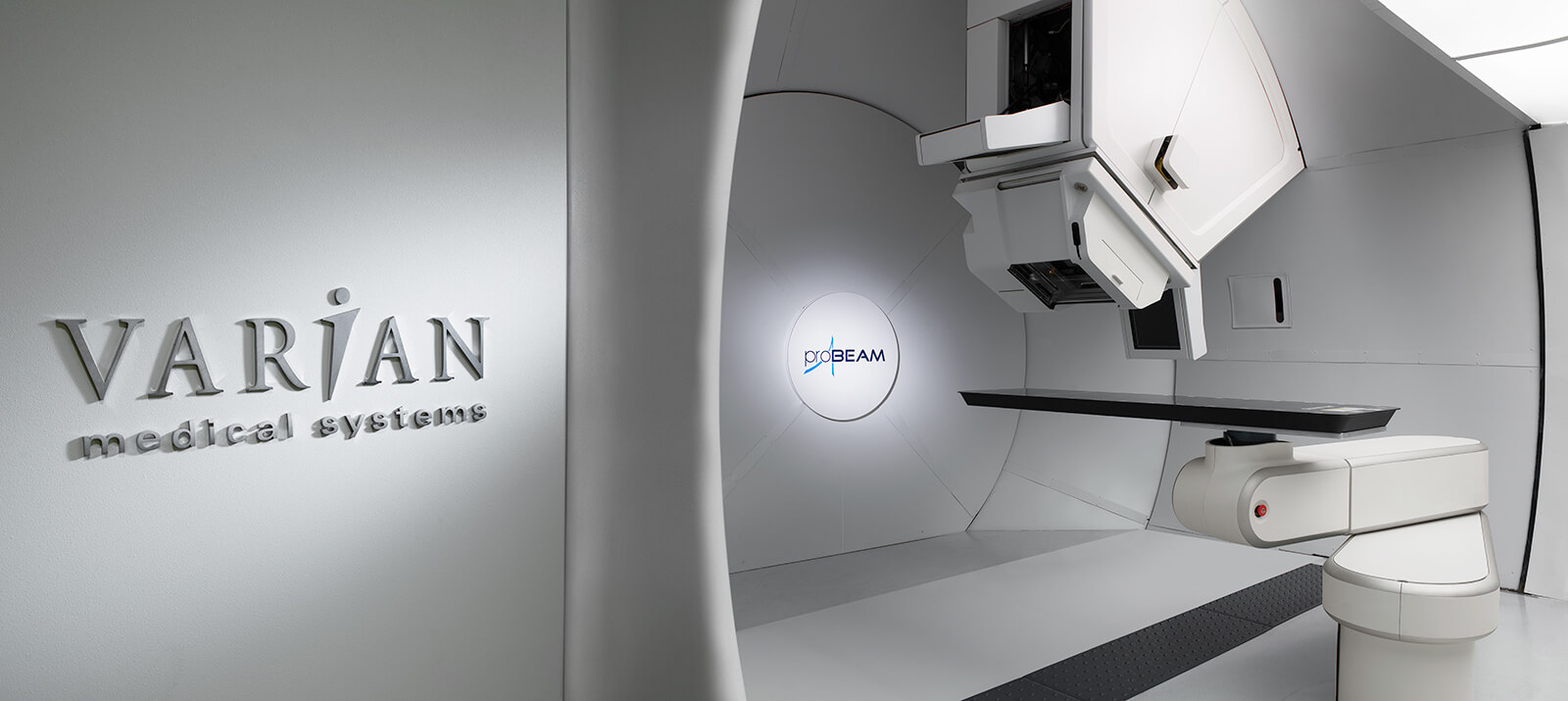
- Our pencil beam scanning technology precisely controls protons to place the Bragg peak—the point at which they deposit their maximum energy—directly in the tumor. This allows us to treat more complex tumor shapes and vary the dose within the tumor.
- Advanced proton therapy allows doctors to more selectively deliver high-dose radiation to cancerous sarcoma cells, and reduce the dose to surrounding healthy tissues and critical organs. In select cases, proton therapy has demonstrated excellent local tumor control rates while reducing radiation exposure to nearby organs compared with conventional X-ray radiation.
- Because sarcomas can be located close to critical and sensitive organs, treating these tumors with radiation can be challenging. Our pencil beam scanning technology delivers radiation with greater precision and control so exposure to nearby organs and tissues such as your heart, lungs, spine, reproductive organs and digestive system is greatly reduced.
- Proton therapy may offer a therapeutic advantage over traditional radiation techniques in the treatment of sarcoma, according to the 2009 sarcoma guidelines from the National Comprehensive Cancer Network (NCCN).
- Proton therapy treatments are noninvasive and delivered on an outpatient basis. Most sessions last 30 to 60 minutes, and patients typically resume normal daily activities shortly afterward.
Is
Proton Therapy for Sarcoma
Right for You?
Depending on the stage of sarcoma, combined treatments of surgery, chemotherapy and radiation may be needed for some sarcoma tumors. Treatment options are also affected by the type of sarcoma, location in the body, age, overall health and personal preferences.
Treatment for
Recurrent Sarcoma Cancer
Proton therapy is often the best way to treat recurrent tumors in areas that have previously been treated with radiation therapy.
Treating previously irradiated areas can be challenging. The healthy tissues around the recurrent tumor do not fully “forget” the previous radiation dose, and any added dose continues to increase the risk of normal tissue injury. Proton beam therapy enables doctors to better concentrate the dose to the target and limit it elsewhere, allowing re-treatment with radiation in select patients.
Sarcoma Proton Therapy Treatment Outcomes & Long-Term Effects
Proton therapy treatment for sarcoma at California Protons Cancer Therapy Center in San Diego may offer similar outcomes to standard X-ray radiation, while reducing long-term and potentially life-threatening side effects such as radiation damage to the heart, lungs, spine, reproductive organs and digestive system. It also offers the possibility of lower chances for secondary cancers later in life due to the reduced radiation exposure to healthy tissues and organs.
However, all cancer treatments have advantages and disadvantages. Be sure to discuss all of the potential risks, as well as treatment options, with your oncologist.
Frequently Asked Questions About Proton Therapy for Sarcoma
Is proton therapy more precise than traditional radiation?
Yes, proton therapy for sarcoma is more precise than photon-based X-ray radiation. Proton therapy uses the Bragg peak effect to deposit radiation directly within the tumor while minimizing the exit dose beyond it.
Can proton therapy treat sarcoma that has returned after radiation?
Proton therapy is often considered for recurrent sarcoma because it better limits additional radiation exposure to previously treated tissues.
Is proton therapy safe for children with sarcoma?
Proton therapy is commonly used in pediatric sarcoma cases to reduce long-term side effects and protect developing organs.
What side effects can occur from Proton Therapy For Sarcoma?
The side effects from proton therapy for sarcoma depend on the treatment area but are often localized and may include fatigue, skin changes, or temporary discomfort.
Is Proton Therapy For Sarcoma Different From Standard Radiation?
Proton therapy for sarcoma differs from standard radiation because it uses protons instead of X-rays (photons) to deliver radiation more precisely. Proton therapy deposits most of its energy directly in the tumor through the Bragg peak effect, with little or no exit dose beyond the cancer.
Does proton therapy work on sarcoma?
Proton therapy can be an effective treatment for certain types of sarcoma, including both soft tissue sarcomas and bone sarcomas. It is especially useful when tumors are located near sensitive organs or structures such as the spine, skull base, lungs, or reproductive organs.
How successful is proton therapy for cancer?
Proton therapy has demonstrated excellent success in treating many types of cancer, with outcomes comparable to traditional radiation therapy and the added advantage of reduced radiation exposure, and therefore reducing many side effects.