Comparing Proton Therapy and IMRT for Prostate Cancer Care
At a Glance:
- Both Intensity Modulated Radiation Therapy (IMRT) and proton therapy are effective, non-surgical radiation options for prostate cancer.
- Proton therapy delivers more targeted radiation, reducing dose to surrounding healthy tissue like the bladder and rectum.
- The right choice for you depends on individual factors, including cancer stage, overall health, and access to a proton center.
Introduction
A prostate cancer diagnosis raises important questions, and one of the biggest is how treatment will affect your quality of life in the years ahead. When exploring radiation options, two treatments often come up: IMRT vs. proton therapy. Both are non-surgical approaches with strong track records, but they differ in how radiation is delivered and how much healthy tissue is exposed in the process. Understanding these differences can help you and your physician find the treatment path that is right for you.
What Is IMRT for Prostate Cancer?
IMRT uses multiple X-ray beams directed at the tumor from different angles, with each beam adjusted in intensity to better conform to the shape of the prostate. IMRT has been used for decades, is backed by a strong evidence base, and is widely available at hospitals and cancer centers across the country.
Treatment may range from several weeks of daily sessions to shorter schedules, depending on the treatment plan. While IMRT offers meaningful precision improvements over older radiation techniques, some exit dose still reaches surrounding tissue, including the bladder and rectum.
What Is Proton Therapy for Prostate Cancer?
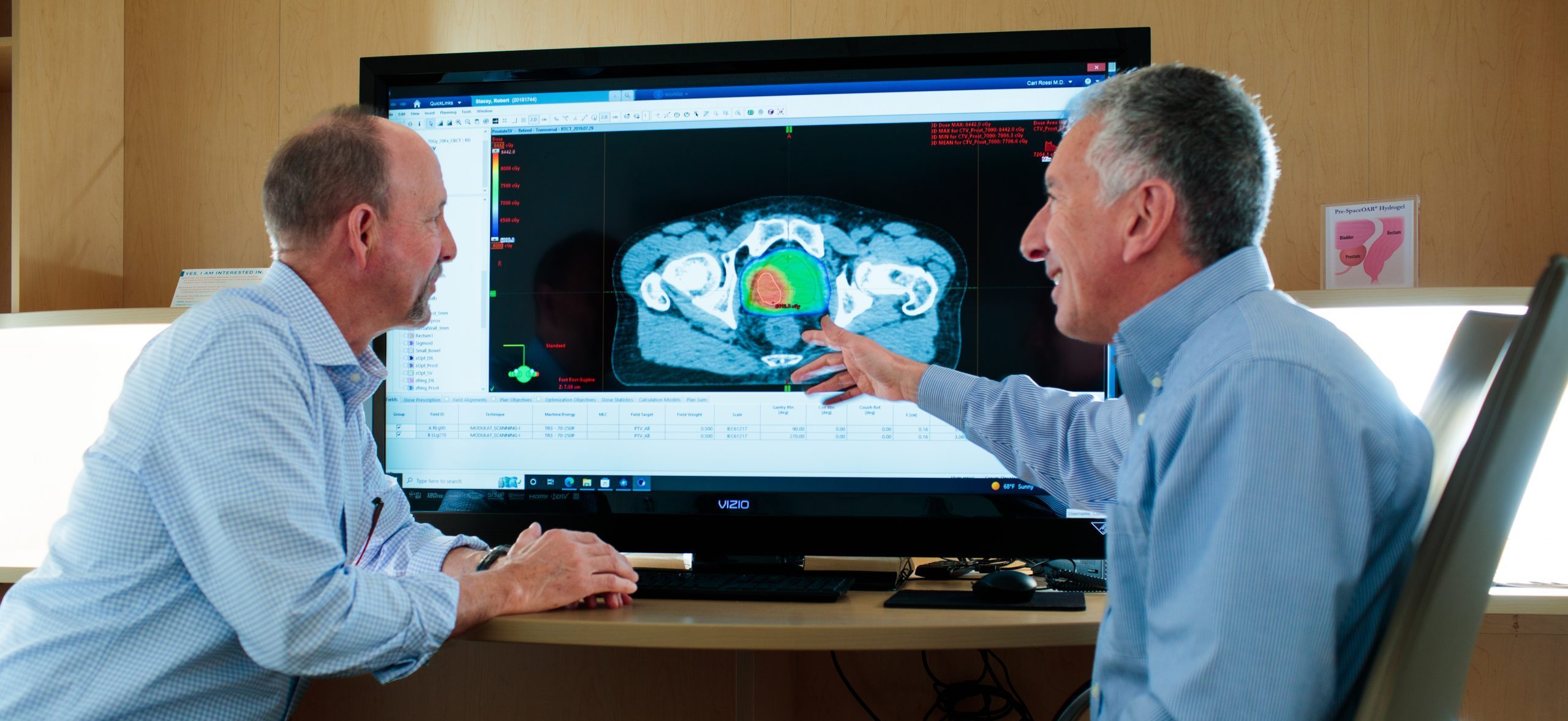
Proton therapy for prostate cancer is a highly accurate and less invasive form of cancer treatment. Protons are subatomic particles with a positive charge that can be manipulated and controlled to stop and deliver radiation directly at a tumor, traveling no further than the exterior tumor wall. This means less exposure to the bladder, rectum, and healthy tissue surrounding the prostate.
Treatment is non-invasive and outpatient-based, and many patients are able to continue their normal routines throughout the process. Proton therapy for prostate cancer is available at specialized centers like California Protons Cancer Therapy Center in San Diego.
Proton Therapy vs. IMRT: Key Differences
Both treatments aim to deliver effective radiation to the prostate, but the way they get there differs in several important ways.
| Proton Therapy | IMRT | |
| Radiation Type | Proton beams | X-ray beams |
| Precision Mechanism | Bragg Peak: energy stops at the tumor | Modulated intensity; some exit dose |
| Dose to Healthy Tissue | Reduces radiation exposure to nearby healthy tissue | Minimized but present |
| Treatment Sessions | ~20–28 sessions (varies) | ~20–40 sessions (varies) |
| Availability | Specialized centers only | Widely available |
| Best for | Often considered when minimizing radiation to nearby tissue is a priority | A strong option when proton therapy is not accessible |
Side Effects: How Do Proton Therapy and IMRT Compare?
Because the prostate sits close to the bladder and rectum, both treatments can cause urinary and bowel side effects during or after treatment. However, because proton therapy delivers less exit dose to surrounding tissues, it may result in fewer or milder side effects, particularly those related to urinary and rectal function.
As with any medical decision, it is important to discuss potential side effects with your physician so you can weigh the benefits and risks based on your individual health.
Which Treatment Is Right for You?
Choosing between proton beam therapy and IMRT is a personal decision. Your physician will consider the stage and grade of your cancer, your overall health, device considerations such as hip implants or pacemakers, access to a proton center, and insurance coverage. Both therapies are considered highly effective for many prostate cancer cases. The primary differentiator is how much healthy tissue is spared. We encourage you to consult with the team at California Protons Cancer Therapy Center to determine the best treatment path for your individual situation.
Explore Proton Therapy at California Protons Cancer Therapy Center
At California Protons Cancer Therapy Center, our radiation oncologists combine decades of experience with advanced pencil beam scanning technology to deliver precise, personalized proton therapy for prostate cancer. Located in San Diego and affiliated with the UC San Diego Health Cancer Network, our center was the first in the nation to treat patients exclusively with pencil-beam scanning technology across all treatment rooms.
If you or a loved one has been diagnosed with prostate cancer and would like to learn whether proton therapy is right for you, we are here to help. Request a consultation to learn more.